Top 10 Reasons People Are Leaving Dallas-Fort Worth in 2026
For years, Dallas-Fort Worth was one of America's biggest relocation success stories. Affordable homes, a booming job market, no state income tax, and plenty of room to grow made North Texas one of the country's most attractive places to live.
That value equation is changing.
DFW is still one of the fastest-growing metro areas in the nation, but the costs of living here have risen much faster than many people expected. For a growing number of homeowners and renters, the financial advantages that once made moving to Texas an easy decision are becoming harder to justify.
If you're considering a move to Dallas-Fort Worth—or wondering why some longtime residents are choosing to leave—here are the biggest reasons driving that decision in 2026.
1. Property Taxes Continue to Climb
One of the biggest surprises for new Texas residents is property taxes.
Without a state income tax, local governments rely heavily on property taxes to fund schools, cities, counties, and other public services. As home values have increased over the past several years, so have many homeowners' tax bills.
Today, it's not uncommon for owners of a median-priced home to pay between $8,500 and $11,500 per year in property taxes, creating a significant ongoing expense even after a mortgage is paid down.
2. Home Insurance Costs Have Skyrocketed
Insurance premiums have become another major financial burden.
Many homeowners have seen their premiums increase 30% to 50% over the past few years due to severe weather, rising construction costs, and higher claim payouts.
In some neighborhoods, annual premiums now approach $6,000 per year, making the true cost of homeownership much higher than many buyers initially expected.
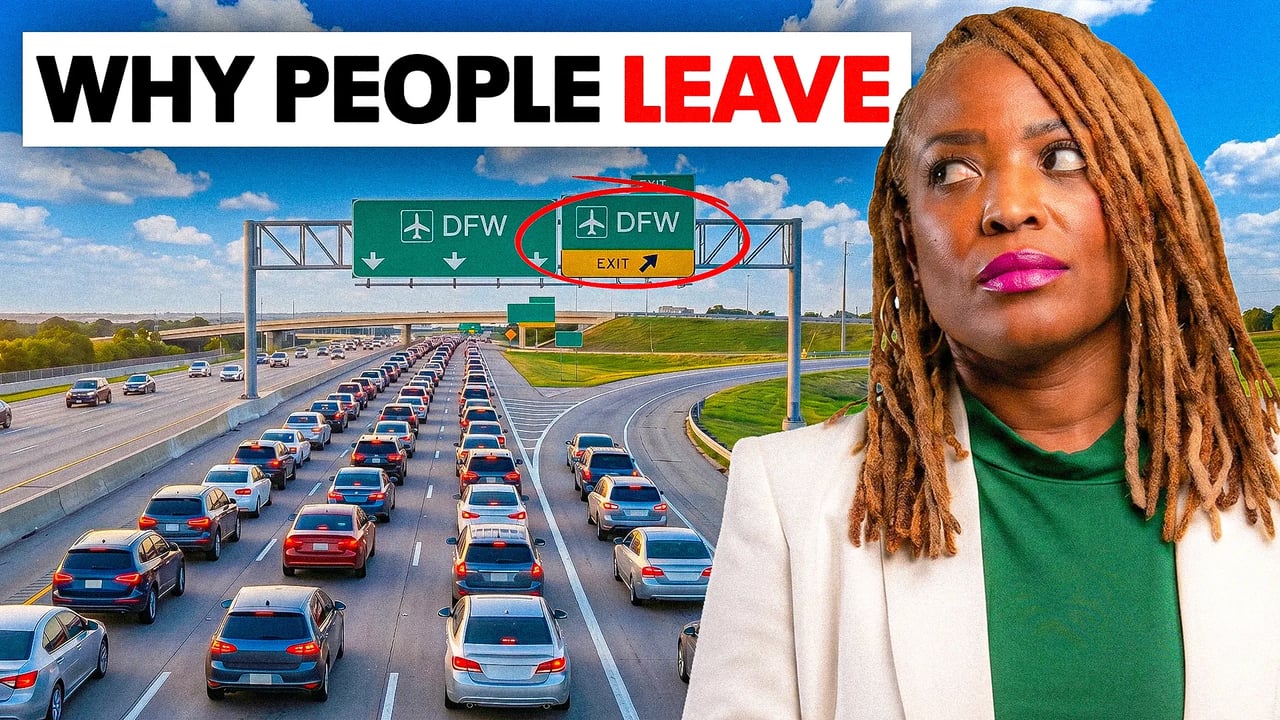
3. Traffic Is No Longer a Minor Inconvenience
Dallas has always been known for driving, but commutes continue to get longer.
With rapid population growth spreading across Collin, Denton, Tarrant, and Dallas counties, average commute times now exceed 30 minutes each way for many workers.
That means spending hundreds of hours every year sitting in traffic, adding both financial and personal costs to daily life.
4. Growth Is Outpacing Infrastructure
Dallas-Fort Worth continues to attract new residents at an impressive pace.
The challenge is that roads, utilities, public transportation, and community services often struggle to keep up with that growth.
When hundreds of thousands of people arrive within a short period, infrastructure improvements simply can't happen overnight.
5. Schools Are Feeling the Pressure
Rapid population growth has also affected local school districts.
Many schools are operating near or above capacity, leading to larger class sizes, boundary changes, portable classrooms, and ongoing construction projects.
Families moving to DFW are increasingly paying close attention to school enrollment before choosing where to buy.
6. Everyday Living Costs Keep Rising
Housing isn't the only expense increasing.
Utilities, insurance, dining, entertainment, childcare, maintenance, and other everyday costs have all climbed in recent years.
While Texas still offers advantages compared to many coastal markets, many residents feel the overall savings have narrowed considerably.
7. The Housing Value Equation Has Changed
Dallas-Fort Worth remains more affordable than cities like San Francisco, Los Angeles, or New York.
However, compared to where the market stood just a few years ago, buyers today face higher home prices, higher mortgage rates, higher taxes, and significantly higher insurance costs.
That combination changes the affordability picture for many households.
8. Quality of Life Is Becoming More Important
Many residents are reevaluating what matters most.
Long commutes, crowded highways, rapid development, and busy suburbs have led some families to consider slower-growing communities where they can enjoy more space and a less hectic lifestyle.
9. More People Can Work From Anywhere
Remote and hybrid work have expanded relocation options.
Instead of living near a major employment center, many professionals now have the flexibility to choose cities based on affordability, lifestyle, or proximity to family rather than office location.
That has opened the door for many to leave DFW while keeping the same job.
10. Residents Are Simply Recalculating the Numbers
Ultimately, many people aren't leaving because Dallas-Fort Worth has become a bad place to live.
They're leaving because the financial equation has changed.
When property taxes, insurance premiums, commuting costs, and everyday expenses are added together, some households find that the savings they once expected are no longer there.
For others, the opportunities, job market, and continued economic growth still make DFW an excellent place to call home.
Final Thoughts
Dallas-Fort Worth remains one of America's strongest metropolitan areas, with a diverse economy, continued job creation, and long-term population growth.
But as the region evolves, so does the cost of living.
Anyone considering a move to North Texas should look beyond home prices alone and evaluate the complete financial picture—including taxes, insurance, transportation, and overall lifestyle.
For some, Dallas-Fort Worth will continue to be an outstanding investment. For others, changing costs are leading them to explore new opportunities elsewhere.
The best decision comes down to understanding the full picture before making your move.
Dee Walton
469-715-3561